 EN

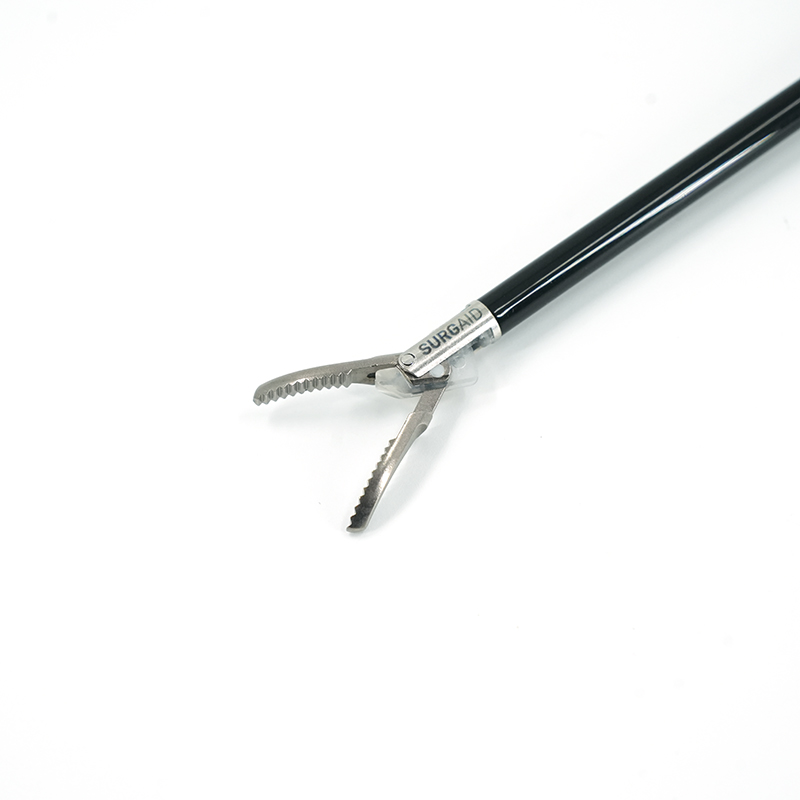
Laparoscopic procedures depend on controlled movement through small ports, so several surgical tasks rely directly on laparoscopic graspers. Their performance affects how clinicians apply traction, maintain exposure, and handle tissue while viewing the operative field on a monitor. Understanding these tasks helps teams match instrument control and jaw design to procedural needs.

The importance of laparoscopic graspers varies with the tissue, access angle, and operative objective. A task may call for steady holding, gentle repositioning, or precise countertraction rather than forceful gripping. The sections below connect common surgical tasks to the performance characteristics that help make each movement controlled and predictable.
Tasks That Establish Exposure and Traction
Creating and maintaining a clear operative view
Exposure is one of the most routine tasks supported by laparoscopic graspers. A surgeon may lift or move an organ, fatty tissue, or a membrane so the target anatomy remains visible while another instrument works. Stable laparoscopic graspers help maintain that position without repeatedly interrupting the next step to reset the view.
The required performance is controlled holding, not maximum force. Laparoscopic graspers should respond consistently to handle movement, and their jaws should engage the intended tissue without slipping during a planned maneuver. In confined spaces, a suitable shaft length and working angle help laparoscopic graspers reach the target while preserving an unobstructed camera view.
Applying countertraction during tissue separation
During dissection, laparoscopic graspers often hold one tissue plane under tension while a cutting or energy instrument separates an adjacent plane. This countertraction can make boundaries easier to distinguish and help the operator direct the active instrument. In this task, laparoscopic graspers contribute to coordination between the two hands as much as to the grip itself.
The grasper must hold securely enough to maintain tension yet allow measured repositioning as the dissection advances. Laparoscopic graspers with controlled jaw closure and dependable rotation can support small adjustments instead of abrupt pulls. Teams should consider whether the jaw pattern and size suit the tissue involved, since laparoscopic graspers used on delicate structures need a different touch from those used for firmer tissue.
Tasks That Manipulate and Mobilize Tissue
Repositioning organs and supporting structures
Organ mobilization calls for laparoscopic graspers to lift, rotate, or translate tissue into a useful position. This may create access to an operative plane or allow the surgeon to inspect a structure from another angle. Laparoscopic graspers performance matters because a small change in direction can alter visibility, tension, and the room available for other instruments.
A controlled grip can help avoid unwanted movement when an organ is repositioned. Laparoscopic graspers should remain manageable when the shaft is angled through a port, where the handle motion may not correspond intuitively to the tip. Smooth articulation and rotation help laparoscopic graspers support deliberate positioning, particularly when the working space is narrow or nearby structures limit movement.
Handling tissue with appropriate force
Tissue handling is not a single action; it includes grasping, releasing, lifting, and adjusting contact as the procedure changes. Laparoscopic graspers need to provide a tactile and visual response that allows the operator to judge whether the tissue is held or beginning to slip. Jaw design, closure control, and instrument balance all influence that assessment.
Delicate tissue may require broad, gentle contact, while firmer tissue can tolerate a more secure hold for repositioning. Laparoscopic graspers should be selected and used with the tissue type and surgical objective in mind, rather than treated as interchangeable tools. When laparoscopic graspers permit gradual closure and predictable release, the surgeon can make corrections without unnecessary repeated gripping.
Tasks That Support Completion and Workflow
Assisting with retrieval and transfer
In some procedures, laparoscopic graspers help guide tissue or a specimen toward a retrieval site or hold it steady while another tool completes transfer. The task requires a secure hold and a tip that can be positioned through the available access path. Laparoscopic graspers performance influences whether the movement remains controlled as the tissue changes orientation.
Specimen handling should follow the procedure’s established containment and retrieval approach. Laparoscopic graspers may provide temporary assistance, but they do not replace a designated retrieval device when one is required. Teams should verify that laparoscopic graspers can reach the planned site and release the tissue cleanly without disrupting visualization or the next operative step.
Supporting coordinated instrument work
Laparoscopic graspers also support tasks that are less visible in the final operative result, such as stabilizing tissue while another instrument sutures, clips, or inspects an area. Reliable control helps the assistant and surgeon coordinate movements through separate ports. In these moments, laparoscopic graspers can reduce avoidable repositioning and keep the operative field organized.
Ergonomics and workflow matter because a grasper may be used repeatedly throughout a case. Handle comfort, ratchet behavior when present, shaft rotation, and ease of release affect how well laparoscopic graspers fit the operator’s technique. Before use, teams should confirm instrument function and compatibility with their procedure and facility protocols; laparoscopic graspers must be ready for the intended role.
FAQ
Which surgical tasks depend most on grasper control?
Exposure, countertraction, organ repositioning, and tissue stabilization all depend on controlled gripping and release. Laparoscopic graspers are especially important when another instrument works on the tissue being held, because steady positioning can support a clear view and coordinated movement.
Does jaw design affect the task a grasper can perform?
Yes. Jaw shape, size, and contact pattern influence how an instrument engages different tissue types. Laparoscopic graspers should be chosen for the intended maneuver and tissue, with a grip that supports the task without unnecessary force.
What should a team check before using a grasper?
Confirm that the instrument moves, rotates, closes, and releases as expected, and check that it suits the planned access and procedure. Laparoscopic graspers should also be handled according to facility protocols and the device instructions for use.