 EN

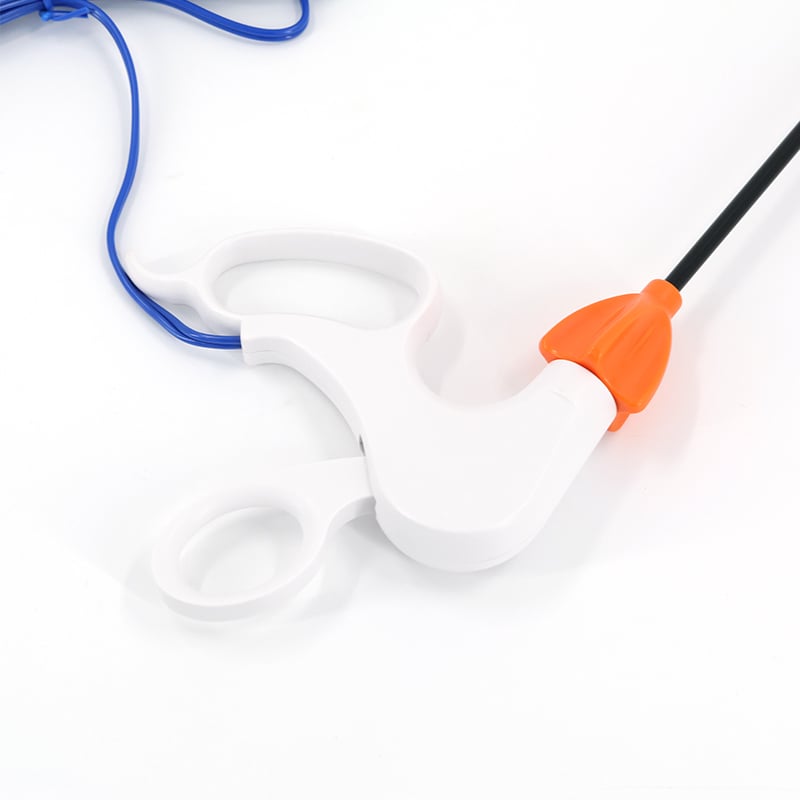
Laparoscopic graspers improve tissue handling by helping surgeons secure, reposition, and release tissue through small access ports while viewing the operative field on a monitor. Their value is not simply the ability to hold tissue: jaw shape, grip control, shaft reach, and instrument response all influence how consistently tissue can be manipulated. Understanding these features helps surgical teams select and use laparoscopic graspers in ways that support controlled work.

In minimally invasive procedures, access is restricted and direct hand contact with tissue is limited. Laparoscopic graspers bridge that gap by transmitting the surgeon’s hand movements through a long shaft to the operative site. When laparoscopic graspers are matched to the task and handled with measured force, they can make tissue repositioning more deliberate, preserve a stable view, and support the next surgical step.
How instrument design supports controlled handling
Jaw geometry shapes contact and grip
The jaw is the part of laparoscopic graspers that directly contacts tissue, so its geometry affects how force is distributed. Broad, smooth jaws can provide a larger contact area for holding delicate structures, while narrower or toothed profiles may offer a more secure purchase when the task calls for traction. The appropriate choice depends on the tissue, procedure, and intended direction of movement.
Surgeons need a grasp that is firm enough to prevent slipping but not so forceful that it causes avoidable compression. Laparoscopic graspers allow the operator to adjust closure and positioning under visual guidance, but the jaw design sets practical limits on contact. Selecting laparoscopic graspers with a jaw suited to the tissue can make a controlled hold easier to maintain throughout a maneuver.
Shaft and handle translate movement
A long shaft lets laparoscopic graspers reach the target through a trocar while keeping the hand outside the patient. This arrangement makes instrument balance and handle response important: small movements at the handle must produce predictable movement at the jaws. Rotatable shafts can also help orient the jaws without requiring a large change in the surgeon’s wrist position.
Handle design influences how laparoscopic graspers feel during repeated opening, closing, and repositioning. A ratchet, when present, can hold a selected grip without continuous squeezing, which may be useful in some tasks but is not right for every maneuver. Surgeons should understand how a locking mechanism engages and releases so the instrument supports, rather than interrupts, deliberate tissue handling.
How grasping technique improves tissue control
Position the instrument before applying traction
Good handling begins before the jaws close. The surgeon brings laparoscopic graspers into view, approaches the intended tissue, and confirms that adjacent structures are not caught between the jaws. This deliberate setup reduces unintended contact and makes the direction of traction easier to judge. A clear view of the tips is especially important when working in confined spaces or near delicate anatomy.
After securing the target, laparoscopic graspers can apply controlled traction to expose a plane, stabilize tissue, or create room for another instrument. The force should be suited to the task, with movement kept gradual enough for the operator to observe the tissue response. If tissue stretches, slips, or changes color in a concerning way, the surgeon can reassess the grip and direction instead of simply pulling harder.
Coordinate grip, movement, and visualization
The monitor provides the visual feedback needed to guide laparoscopic graspers, but the view can change as the camera or instrument moves. Coordinating camera position with jaw movement helps maintain awareness of the contact point and surrounding anatomy. When visibility is limited, pausing to restore a useful view is often more effective than continuing a maneuver without seeing how the tissue is responding.
A stable hold can help another instrument perform a dissection, placement, or closure step, making coordination central to tissue handling. Laparoscopic graspers should be opened and withdrawn in a controlled manner once their role is complete. This avoids dragging the jaws across neighboring tissue and helps preserve space for the next action. Clear communication among the surgical team supports smooth handoffs and repositioning.
How to match graspers to procedural needs
Consider tissue type and task demands
Instrument choice should reflect what the tissue must do during the maneuver. Delicate tissue may call for laparoscopic graspers with a broad, atraumatic contact profile and light handling, whereas a task requiring stable traction may call for a different jaw pattern. The goal is not maximum grip in every situation; it is a dependable hold that suits the tissue and the planned movement.
The procedure also determines whether the surgeon needs frequent release, sustained holding, precise rotation, or access to a particular angle. Comparing these needs with the features of laparoscopic graspers helps teams avoid treating one instrument style as universal. Before use, confirm that the jaw action, shaft length, and handle function are appropriate for the planned access and surgical field.
Check function and maintain consistent practice
Before a case, the team should inspect laparoscopic graspers for smooth jaw opening and closure, secure connections, and expected handle operation. Any locking feature should engage and release as intended, and the instrument should be checked according to facility policy and its instructions for use. Functional checks do not replace appropriate training, but they can reveal problems that could disrupt controlled manipulation.
Consistent technique helps surgeons make the most of laparoscopic graspers across different stages of a procedure. Training can emphasize tip awareness, measured closure, gentle traction, and deliberate release, with practice adapted to the instrument and clinical setting. For teams reviewing instrument options, laparoscopic graspers with a ratchet illustrate why handle features should be considered alongside jaw design and intended use.
FAQ
How do laparoscopic graspers help protect tissue?
Laparoscopic graspers support controlled contact by letting the surgeon see and adjust the jaw position through the camera. Tissue protection also depends on choosing a suitable jaw, applying measured force, and avoiding unnecessary traction. No instrument alone can guarantee atraumatic handling, so technique and continuous visual assessment remain essential.
Can one type of grasper suit every procedure?
No single design is ideal for every tissue or task. Laparoscopic graspers vary in jaw profile, shaft, rotation, and handle function, and these differences affect their suitability. Teams should select an instrument based on procedural requirements, tissue characteristics, access, and the relevant instructions for use.
What should a team check before using a grasper?
Confirm that laparoscopic graspers open and close smoothly, the jaws align as expected, and the handle or ratchet functions correctly. Check the instrument’s condition and compatibility with the planned setup under local policy. During use, maintain a clear view of the tips and reassess grip whenever tissue response or visibility changes.