 EN
EN

Delicate surgical procedures demand exceptional precision and control, particularly when working with fragile tissues that require careful manipulation. Surgeons performing intricate operations on the face, neck, hands, or other sensitive anatomical regions rely on specialized instruments that provide superior exposure without compromising tissue integrity. The skin hook stands as one of the most essential retraction tools in modern surgery, offering surgeons the ability to gently manipulate tissue while maintaining optimal visualization of the operative field. Understanding how a skin hook improves exposure in delicate surgical procedures reveals why this instrument remains indispensable across multiple surgical specialties.
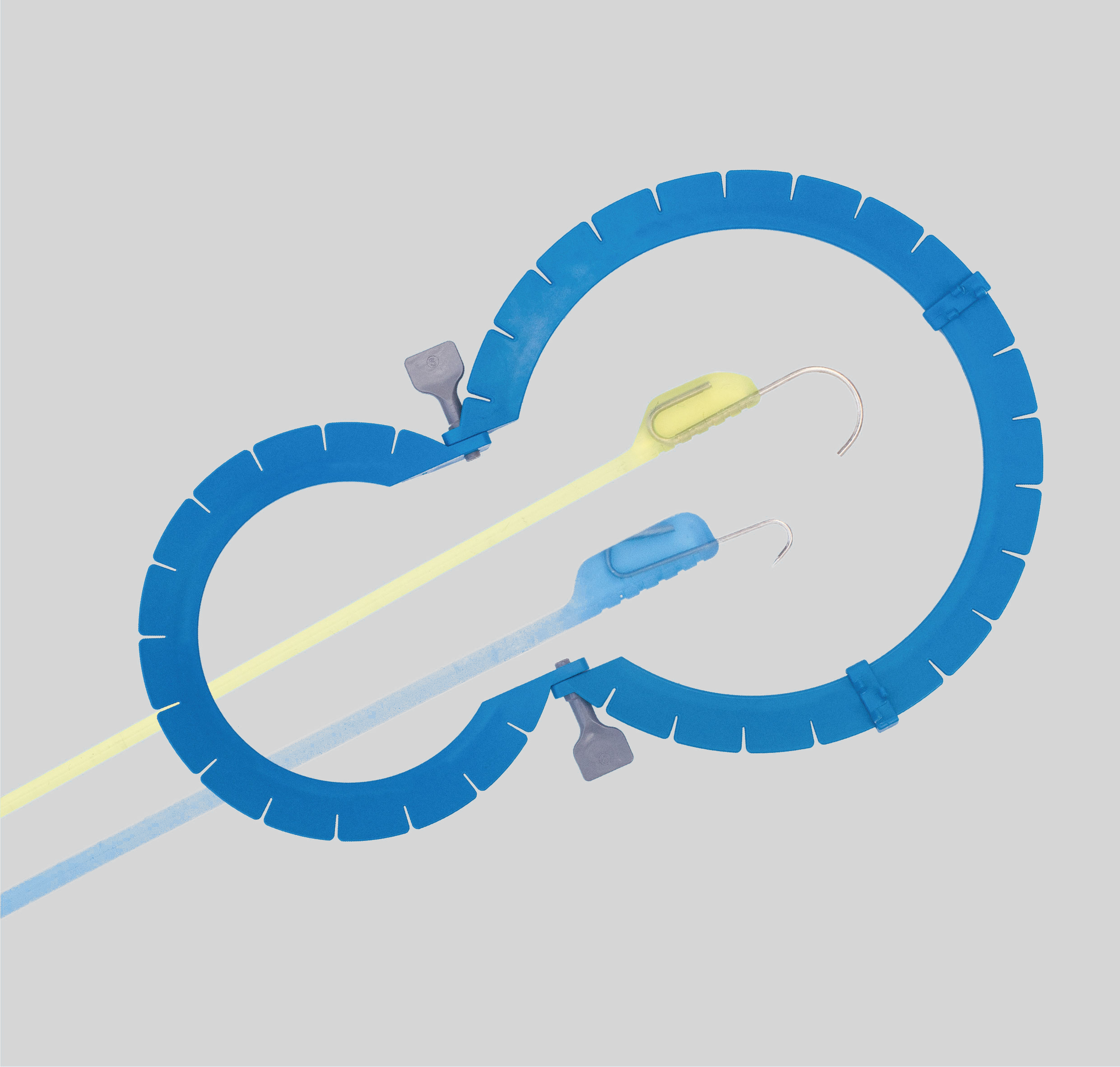
The fundamental advantage of a skin hook lies in its unique design philosophy that prioritizes tissue preservation over broad retraction force. Unlike traditional retractors that compress tissue between blades, a skin hook engages tissue at a single point through a sharp, precisely curved prong. This focused contact method allows surgeons to apply controlled tension exactly where needed, creating exposure pathways that would be impossible with conventional retraction systems. The mechanical principle behind a skin hook centers on converting minimal applied force into effective tissue displacement, making it ideal for procedures where excessive pressure could cause ischemia, tearing, or permanent tissue damage.
Precision Control Through Single-Point Tissue Engagement
Targeted Retraction Without Crushing Force
The skin hook achieves superior exposure in delicate procedures by engaging tissue through a single curved prong rather than compressing it between opposing surfaces. This fundamental design difference means a skin hook applies retraction force at one precise location, allowing the surgeon to select exactly which tissue layer to manipulate. When working in cosmetic facial surgery, for example, a skin hook enables the surgeon to lift the dermis independently from the underlying subcutaneous fat, creating exposure that preserves tissue planes while maintaining anatomical relationships. The focused engagement point of a skin hook prevents the crushing injury that broader retraction instruments can inflict on fragile tissues.
Dynamic Repositioning During Procedure Progression
Another critical way a skin hook improves exposure relates to its repositioning flexibility throughout a surgical procedure. Because a skin hook penetrates tissue at only one point, surgeons can quickly release and reposition it as the operative field evolves. During hand surgery procedures requiring exposure of multiple flexor tendon zones, a skin hook allows the surgeon to sequentially retract skin edges as dissection progresses deeper. This dynamic repositioning capability means the skin hook continuously adapts to changing exposure requirements rather than maintaining static retraction that may become suboptimal as the procedure advances. The ability to adjust a skin hook position in real time without removing the instrument from the field maintains surgical flow and reduces operative time.
Minimizing Tissue Trauma While Maximizing Visualization
Reduced Ischemia Compared to Compression Retractors
The skin hook significantly reduces tissue ischemia during prolonged exposure periods because its single-point contact creates minimal vascular compression. Traditional retractors that clamp tissue between blades occlude multiple blood vessels across a broad contact area, potentially causing tissue necrosis if retraction extends beyond safe time limits. A skin hook, by contrast, affects only the vasculature immediately adjacent to its penetration point, allowing continued perfusion through the majority of the retracted tissue. This preservation of blood flow becomes particularly important in procedures involving compromised tissues, such as reconstructive surgery on previously irradiated skin where vascular supply is already marginal. Surgeons performing these challenging cases rely on a skin hook to maintain tissue viability throughout the operation.
Preservation of Delicate Anatomical Structures
When operating near vital structures such as facial nerves, small vessels, or delicate fascial planes, a skin hook provides exposure that protects surrounding anatomy from inadvertent injury. The controlled, gentle traction applied by a skin hook allows surgeons to create working space without the excessive force that might damage adjacent structures. During thyroid surgery, for instance, a skin hook enables precise retraction of skin flaps while protecting the underlying strap muscles and recurrent laryngeal nerve. The instrument's design allows the surgeon to modulate retraction tension continuously, instantly releasing pressure if resistance suggests proximity to a structure requiring preservation. This real-time control makes a skin hook particularly valuable in anatomically complex regions where surgical landmarks may vary between patients.
Enhanced Surgical Efficiency Through Ergonomic Design
Single-Handed Operation for Improved Workflow
The ergonomic advantages of a skin hook directly contribute to improved exposure by enabling efficient single-handed retraction. Surgeons can hold a skin hook in their non-dominant hand while simultaneously performing dissection, hemostasis, or suturing with their primary hand. This operational efficiency proves especially valuable in procedures where surgical assistants have limited access to the field or when working in confined anatomical spaces. A skin hook designed with proper handle ergonomics reduces hand fatigue during lengthy procedures, allowing the surgeon to maintain consistent retraction pressure without the grip strength degradation that affects exposure quality. The lightweight construction typical of a skin hook means prolonged holding does not strain the surgeon's hand, supporting sustained optimal tissue positioning.
Compatibility with Minimally Invasive Approaches
Modern surgical practice increasingly emphasizes minimally invasive techniques that limit incision size while maintaining adequate exposure. The skin hook excels in these approaches because its slim profile requires only a small access opening while still providing effective retraction. When performing endoscopic brow lift procedures, surgeons use a skin hook through tiny incisions to elevate tissue and create working space without the larger access requirements of traditional retractors. The minimal footprint of a skin hook becomes essential in procedures where every millimeter of incision length impacts cosmetic outcomes. Additionally, a skin hook can work effectively at various angles within a limited access port, providing exposure flexibility that rigid retraction systems cannot match in confined surgical fields.
FAQ
What makes a skin hook different from other surgical retractors?
A skin hook differs fundamentally from other retractors through its single-point tissue engagement mechanism. While traditional retractors compress tissue between opposing blades or surfaces, a skin hook penetrates tissue with one sharp prong, applying focused traction at a precise location. This design allows a skin hook to retract delicate tissues with minimal trauma, making it ideal for procedures requiring gentle handling. The focused contact of a skin hook reduces vascular compression and tissue crushing compared to broader retraction instruments, preserving tissue viability during exposure.
Can a skin hook be used in all types of surgery?
A skin hook finds its primary application in surgical procedures involving delicate, thin, or highly vascular tissues where gentle retraction is paramount. It excels in plastic surgery, hand surgery, facial procedures, thyroid operations, and superficial tumor excisions. However, a skin hook is less suitable for procedures requiring broad, deep retraction of dense tissues, such as abdominal wall retraction during laparotomy or deep pelvic exposure. The instrument's effectiveness depends on matching its design characteristics to the specific tissue properties and exposure requirements of each procedure. Surgeons select a skin hook when precision and tissue preservation outweigh the need for forceful, wide-field retraction.
How does skin hook design affect surgical outcomes?
The design features of a skin hook directly influence surgical outcomes by determining tissue trauma levels, exposure quality, and handling ease. A skin hook with an appropriately sharp prong penetrates tissue cleanly without tearing, reducing inflammatory response and supporting faster healing. The curvature angle of a skin hook affects the mechanical advantage applied during retraction, with optimal curves providing effective exposure using minimal force. Handle ergonomics of a skin hook impact surgeon fatigue and control precision, particularly during lengthy procedures. High-quality skin hook construction using corrosion-resistant materials ensures consistent performance and reduces infection risk. These design elements collectively determine whether a skin hook successfully improves exposure while preserving tissue integrity throughout delicate surgical procedures.