 EN
EN

In minimally invasive surgery, the tools a surgeon relies on must perform with precision under demanding conditions. A laparoscopic retrieval device is one such instrument — designed to safely contain and extract tissue, specimens, or organs through small incisions without contaminating the surrounding cavity. While the core function of a retrieval device may seem straightforward, its usability in a real surgical environment is shaped by a complex set of factors that directly affect procedural efficiency, patient safety, and surgeon confidence.
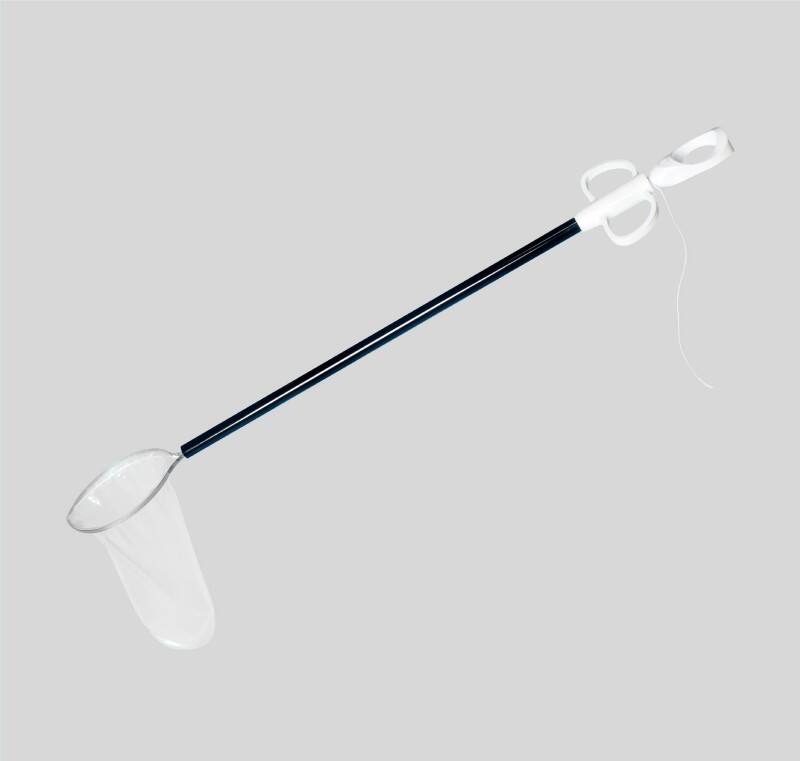
Understanding what makes a retrieval device truly usable — rather than merely functional — is essential for surgical teams, procurement specialists, and medical device evaluators. Usability encompasses everything from how the device deploys inside the body to how intuitively a surgeon can manipulate it under laparoscopic visualization. This article examines the key factors that determine usability, helping clinical and procurement professionals make more informed decisions when selecting a retrieval device for their operating environment.
Deployment Mechanism and Ease of Activation
One-Handed vs. Two-Handed Deployment
The deployment mechanism of a retrieval device is one of the first usability factors a surgeon encounters. Devices that require two-handed activation can interrupt the natural flow of a laparoscopic procedure, particularly when the surgeon is already managing a camera port and a working instrument simultaneously. A well-designed retrieval device should allow the bag or containment pouch to open reliably with minimal hand repositioning.
One-handed deployment systems are generally preferred in high-volume laparoscopic centers because they reduce the cognitive and physical load on the operating surgeon. The activation mechanism — whether it is a trigger, a slide, or a twist-lock — must be intuitive enough that it does not require the surgeon to divert visual attention away from the monitor. Consistency of deployment across multiple uses of the same retrieval device model also builds procedural confidence over time.
Poorly designed deployment systems can cause the bag to open incompletely, fold back on itself, or fail to maintain its shape inside the abdominal cavity. These failures not only slow the procedure but can also compromise specimen containment, which is a critical safety concern in oncological cases where morcellation or spillage must be avoided.
Bag Opening Reliability Inside the Cavity
Once the retrieval device is introduced through the trocar, the bag must open fully and maintain its shape within the limited working space of the peritoneal cavity. Factors such as bag material stiffness, the design of the opening ring or frame, and the memory properties of the pouch all influence how reliably the bag expands to its intended dimensions.
A retrieval device that opens inconsistently forces the surgeon to spend additional time repositioning or manually manipulating the bag, which adds operative time and increases the risk of inadvertent tissue contact. Devices with self-retaining ring structures or shape-memory frames tend to offer more predictable opening behavior, especially in cases where the working space is restricted by adhesions or organ proximity.
Surgeons performing procedures such as laparoscopic cholecystectomy, nephrectomy, or myomectomy have different spatial requirements, and the retrieval device must be evaluated in the context of the specific anatomy and cavity volume involved. A device that performs well in a spacious abdominal cavity may be far less usable in a confined pelvic space.
Bag Capacity, Material, and Specimen Compatibility
Matching Bag Size to Specimen Volume
The physical capacity of the retrieval device bag is a fundamental usability factor. A bag that is too small for the target specimen forces the surgeon to either abandon the device mid-procedure or attempt to compress tissue in ways that risk perforation or spillage. Conversely, an oversized bag in a confined cavity creates handling difficulties and reduces maneuverability.
Usability is therefore closely tied to the availability of a retrieval device in multiple size options. Surgical teams benefit from having a range of bag capacities that correspond to the expected specimen sizes for their most common procedures. Standardizing on a retrieval device platform that offers consistent handling across different sizes reduces the learning curve and minimizes the risk of intraoperative errors caused by unfamiliar equipment.
Procurement teams should evaluate whether the retrieval device supplier offers a coherent size range and whether the deployment handle and mechanism remain consistent across sizes. Inconsistency in handle design between small and large bag variants can introduce usability problems when staff rotate between procedure types.
Material Strength and Puncture Resistance
The material from which the retrieval device bag is constructed directly affects its usability in terms of safety and reliability. The bag must withstand the mechanical forces applied during specimen manipulation, including traction, rotation, and the use of morcellators in applicable procedures. A bag that tears or punctures under normal operative stress is not only unusable — it is a patient safety risk.
High-quality retrieval device bags are typically manufactured from multilayer polymer films that balance flexibility with tensile strength. The material must also be sufficiently transparent or translucent to allow the surgeon to visualize the specimen through the bag wall under laparoscopic light, which aids in confirming complete containment before extraction.
Fluid impermeability is another material property that contributes to usability. In procedures involving cystic structures or vascular tissue, the retrieval device must prevent fluid leakage into the peritoneal cavity during and after specimen loading. Devices that fail this requirement create additional steps for irrigation and suction, extending operative time and increasing contamination risk.
Trocar Compatibility and Insertion Profile
Shaft Diameter and Port Size Requirements
A retrieval device must be compatible with the trocar ports already in use during the procedure. If the device requires a dedicated larger port that was not part of the original surgical plan, it introduces an additional incision, which contradicts the minimally invasive principle and adds patient recovery burden. Usability therefore depends heavily on whether the retrieval device can be introduced through standard 5 mm, 10 mm, or 12 mm ports.
Devices with a low-profile insertion shaft allow surgeons to use existing ports without upsizing, which is a significant practical advantage. The shaft must also be rigid enough to guide the bag accurately to the target site without buckling, yet flexible enough to navigate the angulation required when working through off-axis port positions.
In single-incision laparoscopic surgery or robotic-assisted procedures, port compatibility becomes even more critical. The retrieval device must be evaluated not only for standard multiport laparoscopy but also for the specific access configurations used in the surgical center's practice.
Extraction Ease and Closure Mechanism
After the specimen is loaded, the retrieval device must allow the surgeon to close and secure the bag before extraction. The closure mechanism — typically a drawstring, cinch cord, or self-sealing collar — must be operable under laparoscopic visualization without requiring excessive force or fine motor precision that is difficult to achieve through a trocar.
A poorly designed closure on a retrieval device can result in an incompletely sealed bag, which creates spillage risk during the extraction phase. The extraction process itself, which often involves enlarging one port site to accommodate the bag and specimen, must be supported by a bag neck that is long enough to exteriorize cleanly and strong enough to withstand the traction forces applied during removal.
Surgeons frequently cite extraction ease as one of the most important usability dimensions of a retrieval device, particularly in cases involving large or irregularly shaped specimens. Devices that allow controlled, stepwise extraction with clear tactile feedback at each stage reduce the risk of bag failure at the critical final step of the procedure.
Ergonomics of the Handle and Surgeon Interface
Handle Design and Grip Comfort
The handle of a retrieval device is the primary interface between the surgeon and the instrument. Its ergonomic design determines how comfortably and accurately the surgeon can control the device throughout the procedure. A handle that causes hand fatigue, requires awkward wrist positioning, or lacks tactile differentiation between its control elements will reduce usability, particularly in longer procedures.
Ergonomic handles are typically contoured to fit the natural grip of the hand, with control elements positioned to minimize finger extension or lateral deviation. The weight distribution of the retrieval device should place the center of gravity close to the hand to reduce the perceived instrument weight during sustained use. Lightweight materials in the handle construction contribute to this without compromising structural integrity.
For surgical teams that perform high volumes of laparoscopic procedures, cumulative ergonomic strain is a real concern. A retrieval device with a well-designed handle reduces the physical demand on the surgeon and supports consistent performance across multiple cases in a single operating day.
Visual Feedback and Tactile Confirmation
Usability in laparoscopic surgery is also shaped by the quality of feedback the surgeon receives from the instrument. Because direct tactile contact with tissue is absent in laparoscopy, the retrieval device must compensate through clear visual cues and reliable mechanical feedback at each stage of use — deployment, loading, closure, and extraction.
Color-coded components, audible clicks at locking positions, and clearly differentiated control surfaces all contribute to a retrieval device that communicates its status to the surgeon without requiring additional cognitive effort. These design features reduce the likelihood of procedural errors caused by ambiguity about whether the device has reached a secure state.
Training and familiarity also play a role in perceived usability. A retrieval device that is consistent in its feedback across different bag sizes and procedure types allows surgical teams to build reliable mental models of the instrument's behavior, which translates into faster, more confident use in the operating room.
Sterility, Packaging, and Readiness for Use
Packaging Design and Sterile Field Compatibility
Usability does not begin when the retrieval device enters the body — it begins when the scrub technician opens the packaging at the sterile field. Packaging that is difficult to open, prone to contamination during transfer, or poorly labeled for size and orientation creates friction before the procedure even starts. A retrieval device with well-designed sterile packaging supports efficient setup and reduces the risk of sterility breaks.
Peel-open pouches with clear directional indicators, color-coded size labeling, and pre-loaded configurations that do not require assembly at the sterile field all contribute to a smoother intraoperative workflow. The retrieval device should be ready to use immediately upon opening, without requiring the scrub technician to perform complex preparation steps under time pressure.
Packaging that clearly communicates the device's expiration date, lot number, and sterility indicator status also supports compliance with hospital quality management requirements, which is an important consideration for procurement and sterile processing departments.
Single-Use Design and Consistency Across Units
Most modern laparoscopic retrieval devices are designed for single use, which eliminates the variability introduced by reprocessing and ensures that every unit performs to the same specification. Consistency across units is a critical usability factor because surgeons and scrub technicians develop procedural habits based on expected device behavior. A retrieval device that varies in deployment force, bag stiffness, or closure resistance between units undermines that consistency and introduces uncertainty into the procedure.
Single-use design also supports infection control objectives, which are increasingly important in the context of hospital-acquired infection prevention programs. For procurement teams, the total cost of a single-use retrieval device must be evaluated against the reprocessing costs, quality risks, and regulatory burden associated with reusable alternatives.
Ultimately, a retrieval device that delivers consistent, predictable performance from the first unit to the thousandth is one that surgical teams can trust — and trust is the foundation of genuine usability in a high-stakes clinical environment.
FAQ
What makes a retrieval device easy to use during laparoscopic surgery?
Ease of use in a retrieval device depends on several interacting factors: reliable one-handed deployment, consistent bag opening inside the cavity, intuitive closure mechanisms, ergonomic handle design, and compatibility with existing trocar ports. Devices that perform predictably across all these dimensions reduce cognitive load on the surgeon and support efficient, safe specimen extraction.
How does bag material affect the usability of a retrieval device?
Bag material affects usability through its influence on puncture resistance, flexibility, transparency, and fluid impermeability. A retrieval device bag that tears under normal operative forces or leaks fluid into the peritoneal cavity creates safety risks and additional procedural steps. High-quality multilayer polymer films balance the mechanical and optical properties needed for reliable performance.
Why is trocar compatibility important when selecting a retrieval device?
Trocar compatibility determines whether the retrieval device can be introduced through existing port sites without requiring additional incisions. A device that fits standard 5 mm to 12 mm ports preserves the minimally invasive nature of the procedure and avoids the patient recovery burden associated with upsizing or adding new access points. Compatibility should be verified for the specific port configurations used in each surgical center's practice.
How does packaging design influence the usability of a retrieval device in the operating room?
Packaging design affects usability by determining how quickly and safely the retrieval device can be transferred to the sterile field and prepared for use. Peel-open pouches with clear orientation indicators, pre-loaded configurations, and unambiguous size labeling reduce setup time and minimize the risk of sterility breaks. Well-designed packaging supports the overall efficiency of the surgical team from the moment the device is opened.
Table of Contents
- Deployment Mechanism and Ease of Activation
- Bag Capacity, Material, and Specimen Compatibility
- Trocar Compatibility and Insertion Profile
- Ergonomics of the Handle and Surgeon Interface
- Sterility, Packaging, and Readiness for Use
-
FAQ
- What makes a retrieval device easy to use during laparoscopic surgery?
- How does bag material affect the usability of a retrieval device?
- Why is trocar compatibility important when selecting a retrieval device?
- How does packaging design influence the usability of a retrieval device in the operating room?